Beyond Trafficking to open refuge for survivors
By Floyd Miller/West Texas Tribune
Beyond Trafficking, an Abilene nonprofit dedicated to serving survivors of human trafficking, is about three months from opening the Amada House, an emergency crisis home that will give survivors a safe place to land immediately after they escape their traffickers.
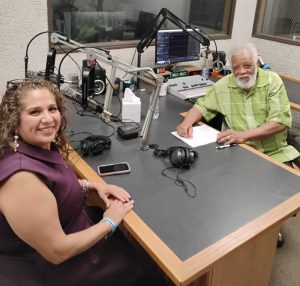
Stephanie Rocha, executive director of Beyond Trafficking, recently discussed the project with Floyd Miller on the “It’s Everything West Texas” podcast. (Photo By Calvin Claborn)
Stephanie Rocha, executive director of Beyond Trafficking, discussed the project and the broader fight against trafficking in West Texas during an interview on the “It’s Everything West Texas” podcast, hosted by me, Floyd Miller.
Rocha said the name Amada — Spanish for “beloved” — was chosen deliberately, so survivors who stay there know they are valued. She said the home, which will be able to house up to 12 people, including live-in house parents, has been built almost entirely through community donations of land, labor, materials and skilled trade work, from roofing and plumbing to landscaping by local church groups.
Although the home can accommodate up to 12 residents, Rocha said she would prefer to keep the population closer to eight to 10, so survivors can receive more individualized care.
Filling a critical gap
Rocha said fewer than 2% of beds nationwide are available for human trafficking survivors, and most existing safe houses set a high bar for entry — requiring that a survivor already be off drugs, not pregnant and mentally stable before they can be admitted. The Amada House, she said, is designed to meet survivors where they are, taking them in immediately and stabilizing them for the first three to six months before transitioning them into longer-term housing.
In the meantime, Rocha said, Beyond Trafficking relies on a network of safe houses across the region and the country, working daily to place survivors based on their individual needs — whether they are pregnant, have a child with them, or require ongoing mental health medication. She said the shortage is especially severe for male survivors; the only safe house in the country dedicated to men is located in Denton.
Until a placement is found, Rocha said her organization houses survivors temporarily in hotels or in what she described as foster-style homes, while also operating a drop-in center that provides food, clothing, hygiene items and a computer lab survivors can use to pursue education or career goals.
Misconceptions about human trafficking
Rocha said popular culture has shaped a misleading picture of what trafficking looks like, with many people picturing strangers abducting children from parking lots. In reality, she said, the majority of cases she encounters involve familial trafficking — trafficking by a parent or other family member — or trafficking by a boyfriend, sometimes referred to as a “Romeo pimp.”
She said trafficking is typically rooted in some form of vulnerability, such as drug addiction, poverty or homelessness, and that mothers are statistically the most common trafficker of their own children within familial trafficking cases. Rocha said she has heard testimony from a mother who trafficked her own young children and explained her actions by saying it was what she had learned from her own mother.
Rocha said the average age of entry into trafficking is 11 to 12 years old, which is why Beyond Trafficking focuses much of its prevention education on middle-school-age children, as well as their parents. She said children should be taught to recognize warning signs in online interactions — including requests for secrecy — and should be able to identify at least five trusted adults they can turn to if something feels wrong.
Rocha encouraged community members who suspect they are witnessing trafficking to document what they see, including photos of vehicles or individuals, and report it to authorities or the National Human Trafficking Hotline rather than intervening directly. She recounted an incident in which a convenience store clerk, after completing one of Beyond Trafficking’s training sessions, recognized warning signs in a customer and alerted his manager, who called 911; the woman was later confirmed to be a trafficking victim and was removed from the situation.
Abilene is a regional hub for trafficking
Rocha said West Texas, and Abilene in particular, has increasingly become a corridor for trafficking activity because of Interstate 20, which connects the region to El Paso and Dallas. She said a trafficker she once interviewed told her he targeted Abilene specifically because residents “don’t expect it.”
Rocha, who also chairs the Texas Balance of State for the Texas Homeless Network, said rising homelessness in Abilene has compounded the region’s vulnerability to trafficking, since people without stable housing are often targeted or coerced. She said Abilene currently has only one emergency homeless shelter even as the unsheltered population continues to grow.
Volunteers, funding and a long-term vision
Rocha said Beyond Trafficking depends heavily on volunteers, with roughly 25 to 30 people assisting on any given day and about 10 paid staff members currently on the team. She said volunteer needs range from sorting donated clothing to offering survivors art therapy or gardening instruction, and she encouraged anyone with a skill or interest to reach out.
Funding remains the organization’s top need as it prepares to open the Amada House, Rocha said, along with continued volunteer labor to finish remaining work on the property, including plumbing and drywall. She also asked the community for prayer support, describing the work as emotionally demanding.
Looking ahead, Rocha said her five- to 10-year vision includes establishing a long-term housing option for survivors beyond the emergency stabilization the Amada House will provide, as well as eventually opening a home specifically for trafficked children and youth aging out of the foster care system, a population she described as especially vulnerable.
A survivor reunited
Rocha shared the story of one survivor who was trafficked by her boyfriend, who sold her for drugs while she was pregnant. The child was removed from her custody at birth, but after completing a recovery program through Beyond Trafficking and the Safe House Project, the woman secured housing and employment. Rocha said the woman regained custody of her child in court roughly two months ago.
Rocha also pointed to a second survivor she works with, a young woman who was trafficked by family members, including an aunt, an uncle and her father. After working for years to get out of that situation, Rocha said the woman is now using her experience to advocate against trafficking and is scheduled to speak as part of a group of survivor advocates at a gala in Colorado.
Community members seeking to volunteer, donate or report concerns about potential trafficking can get more information about Beyond Trafficking on the organization’s website, www.beyondtrafficking.com, by calling 325-338-2166 or by sending an email to: [email protected].