An Inside Job
By Dr. Jerry Andrew Taylor/West Texas Tribune
There is an old warning that still echoes across time. Abraham Lincoln once said that America would not be destroyed from the outside. If it falls, it will be by its own hand. Not by invasion, but by unraveling quietly, from within.
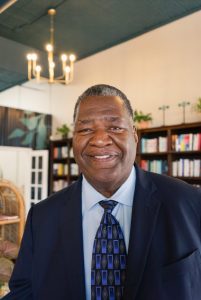
Dr. Jerry Andrew Taylor
That truth now stands before us, asking to be seen. Every citizen, no matter their background, carries a responsibility not just to live in this nation, but to care for it. To ask hard questions. To seek the healthiest response to the deepest threats facing our shared life.
And the greatest threat today does not march under a foreign flag. It lives beneath the surface in racial tension, political division, and religious hostility that divide neighbor from neighbor.
The words of Jesus still speak with unsettling clarity: A divided kingdom cannot stand.
And yet, we are living in a time when division feels almost natural. Each group turns inward, protecting its own story, its own fears, and its own interests. The sense of a shared commonwealth, a space where all belong seems to be fading.
What once was called integration now feels, in many places, like a quiet return to separation. A new kind of segregation. A new age of tribes. We compete. We withdraw. We mistrust.
The idea of a multicultural society, once held up as an ideal, is no longer universally embraced. Some now reject it outright, seeing diversity not as strength, but as threat. They speak of it as dangerous, even demonic. They fear that openness will lead to loss and that welcoming others will mean the disappearance of something they hold dear.
And these are not always voices on the margins. These ideas are found in classrooms, in books, in institutions of higher learning. They are argued with intelligence, written with persuasion, and received by millions.
Fear, when dressed in reason, can travel far. Even within Christian communities, this tension is present. There are those who speak of equality, diversity, and unity and who affirm these values in word. Yet their actions tell another story.
Their hiring, their leadership, their decisions reveal a quieter truth. What is spoken is not always what is practiced. The vision declared is not always the reality lived.
And so we are left with a question that grows heavier with time: Can different people truly share the same land without feeling the need to compete, dominate, or destroy one another?
Much of our conflict is rooted in fear, the fear that another group will gain power over us, and in gaining power, will do to us what has been done before.
This fear runs deep. It is tied to survival. It tells us to protect our own at all costs.
And so we divide the world into insiders and outsiders. Those who belong and those who threaten.
Within each group, there is often an unspoken agreement: We must stick together. We must protect one another. Even if it means turning against others. In that moment, loyalty to the group rises above everything else, even above faith, and even above conscience. The group becomes the highest good.
But the voice of Scripture speaks differently. The apostle Paul calls us to a higher way: Do nothing out of selfish ambition or vain conceit, but in humility consider others better than yourselves. Look not only to your own interests, but also to the interests of others.
These are not easy words in a world shaped by competition. They challenge the very instincts that drive us to protect and preserve ourselves above all else. Because conflict, at its core, is often a struggle for space, two forces trying to occupy the same ground at the same time.
Individuals, groups, even nations collide when desires compete and resources feel limited. James names this truth with piercing honesty: What causes fights and quarrels among you? Don’t they come from your desires that battle within you? You want, but you do not have. You covet, and you cannot obtain. So you fight.
The conflict outside us is often a reflection of the conflict within us. And so the question returns not only to the nation, but to each of us: Will we be governed by fear, or guided by a deeper vision of shared humanity?
Because the future of this nation will not be decided only by policies or elections. It will be shaped by what we believe about one another and whether we can learn to live together without seeing each other as enemies.