Memphis church receives Texas Historical Marker
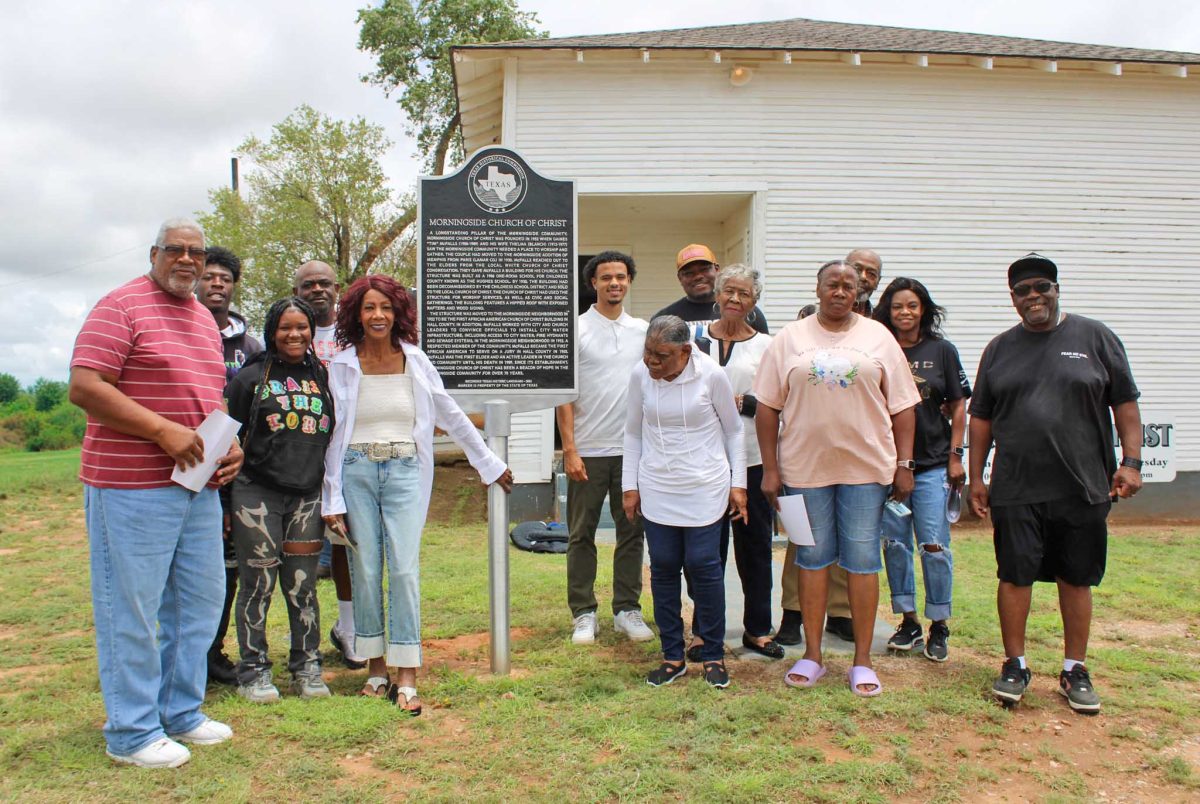
Members of the Morningside Church of Christ stand next to the historical marker issued by the State of Texas. (Photo by Elizabeth Tanner/The Greenbelt Intrepid)
By Elizabeth Tanner/The Greenbelt Intrepid
MEMPHIS, Texas — Morningside Church of Christ in Memphis hosted an unveiling of a Texas Historical Commission Marker Saturday, June 6, honoring the oldest continuously used building in Hall County.
“This is something that we’ve been working on for years,” said Neal Hughes, who spearheaded the project. “We never though it would come to fruition.”
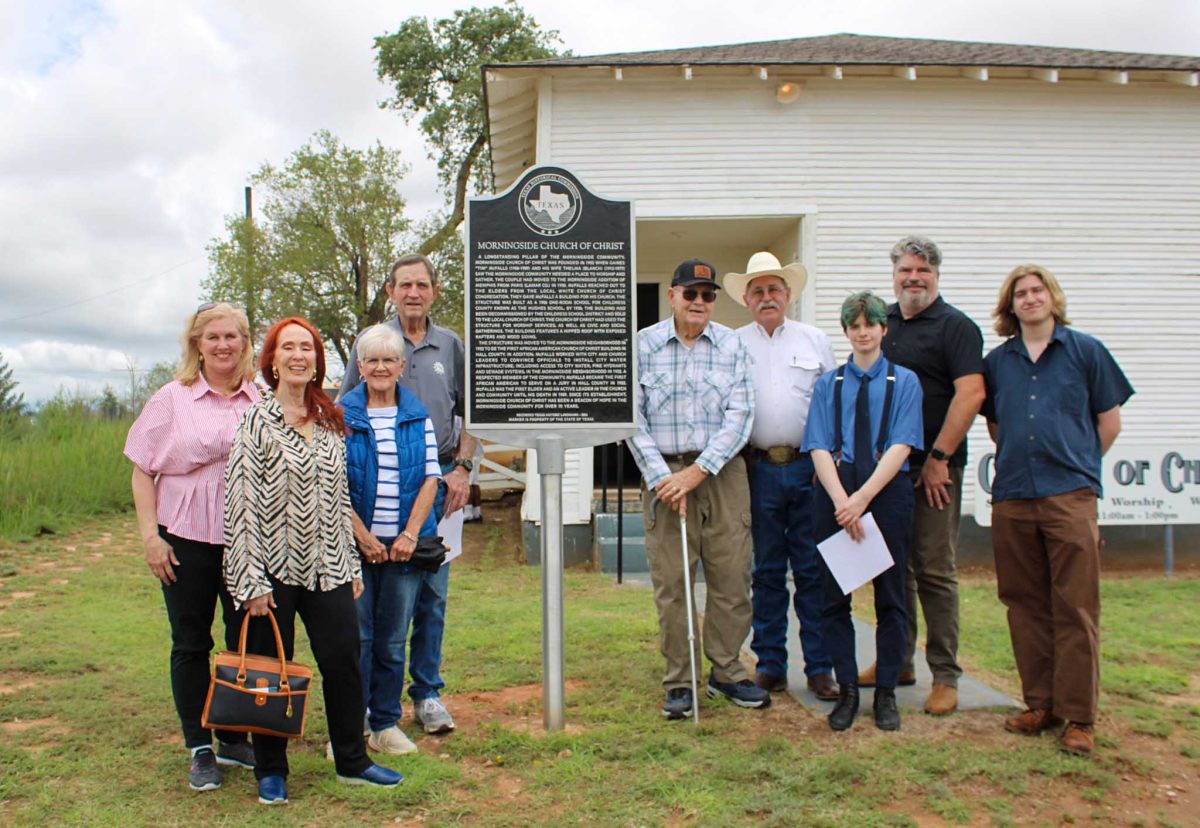
Descendants of the Hughs Family showed up for the historical day. The building was once known as Hughes School and was located on property belonging to J.E. and Ola Hughs, grandparents and great-grandparents to some of the descendants. (Photo by Elizabeth Tanner/The Greenbelt Intrepid)
During the lengthy application process requiring years of research, Hughes, who said the building was originally built on his grandfather’s ranch in Childress County for use as a prairie school, recruited Mike Goldsby of Houston, who to help expedite the project.
“Neal had a dream — he wanted to help this congregation,” Goldsby said. “He told me he was having trouble getting this project off of the ground, but he saw something here.
“By that afternoon, I had gathered up enough information that I knew this project had legs,” Goldsby added. “So, I told him, ‘I’ll do the research on this, and we’ll get it done.’”
So, Goldsby, a self-proclaimed historian, who is responsible for four Texas Historical Commission Markers in Turkey, where he owns Goldsby’s 1928 Phillips 66, the first Phillips 66 service station in Texas, began researching the building’s history.
Built in 1906, the building, known as Hughes School, served as one of 34 one-room prairie schools in Childress County until 1930, when the building was decommissioned by the Childress school district.
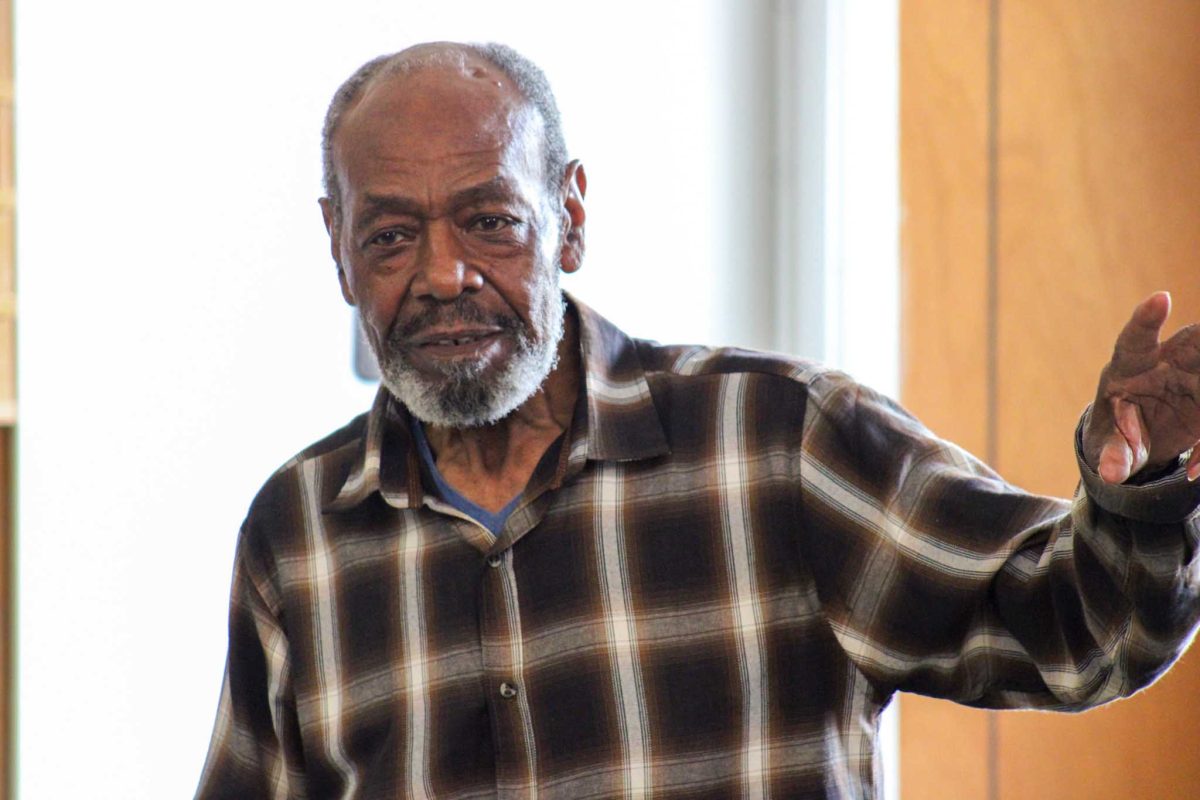
Woodrow “Woody” Richardson is the preacher at Morningside Church of Christ. He is married to Lola, Tim McFalls’ daughter. (Photo by Elizabeth Tanner/The Greenbelt Intrepid)
Acquired by the local Church of Christ, the building served as a church, as well as a place for civic and social gatherings, from 1930-1952.
It wasn’t until 1952, when Gaines “Tim” McFalls (1908-1989) and his wife, Thelma (1912-1977), saw a need for a place of worship and gathering in the Morningside community, that the building received its permanent home.
“From my research, Tim McFalls was quite a man,” Goldsby said. “He was determined to make this a better community, and one of the things he needed was a house of worship.”
So, McFalls reached out to the elders of the local white Church of Christ congregation, who gave McFalls the building for his church — the first African American Church of Christ in Hall County.
McFalls, in addition to church leaders, worked to convince city officials to install city water infrastructure, including access to city water, fire hydrants and sewage systems, to the building. The building, which was previously lantern-only, also received electricity.
“It is the oldest continuously used building in Hall County,” Goldsby said. “From 1952 until last Sunday, this building has been in regular service as a church. It has never been out of use.”
And, highlighting a beacon of hope in the Morningside community for over 70 years, the marker is even more special than meets the eye, Goldsby said, as it is part of the Untold Marker Program, meaning the State of Texas paid for all fees associated with the marker.
“It’s a very competitive process,” Goldsby said. “The State of Texas only chooses 15 markers, and they receive about 350 marker applications per year. This is one of only 15 that the State of Texas thought was special enough to be designated to be in the Undertold Marker Program.
“It’s a special marker,” Goldsby added. “The State of Texas is extremely proud to give this marker to the Morningside Church of Christ, and I’m proud to be a part of this process.”

Neal Hughs was a driving force behind the historical marker. (Photo by Elizabeth Tanner/The Greenbelt Intrepid)