Marker honoring 1922 lynching victim set for Juneteenth weekend dedication
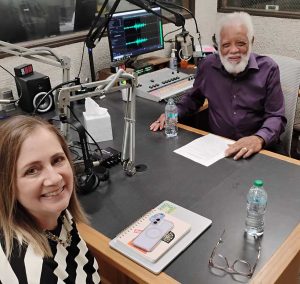
West Texas Tribune Publisher Floyd Miller recently interviewed Amy Boone about the project to install a historical marker Grover C. Everett, a Black road worker lynched in Abilene in 1922.
This article features excerpts from a conversation with West Texas Tribune Publisher Floyd Miller and Amy Boone for the “It’s Everything West Texas” podcast.
A historical marker honoring Grover C. Everett, a Black road worker lynched in Abilene in 1922, will be dedicated Saturday, June 20, at the site where he died, more than a century after his death and seven years after the effort to memorialize him began.
The dedication is scheduled for 10 a.m. Saturday, June 20, between North Third and North Fourth on Ash Street. Organizers expect the ceremony to last less than 30 minutes, after which attendees will walk or drive a few blocks to the Curtis House for a reception.
Amy Boone, who has led the project for the past 15 months, said Everett was not an Abilene resident but had come to the city to work on a road crew at a time when local roads were first being made passable by paving. “He came in to be a road crew worker,” she said. “At that time, in 1922, there were only two locations in Abilene where Black people could stay, in terms of like a motel or a boarding facility, and one of them was the Joe Davis Motel.”
Everett was staying at the Joe Davis Motel, on the corner of North Fourth and Ash streets.
Boone said that one evening after Everett returned from work, Ku Klux Klansmen arrived at the motel and asked owner Joe Davis where Everett was.
“There was some sort of like brief verbal exchange, but that was it,” Boone said. “The Klansmen began walking upstairs. Joe Davis tried to follow them up, and the Klansmen, according to records, said, ‘You need to just go away, you have no business here.'”
Boone said witnesses heard one gunshot before the men fled in a car.
“Joe Davis, and there were about three other Black witnesses, all found Mr. Everett dead in the hallway, coming outside of his room,” Boone said. “It is unknown as to why this happened, which obviously, as we know, is truly the definition of lynching. It’s an extra judicial killing that is racially motivated.”
The push to memorialize Everett dates to 2019, when McMurry University professor Robert Wallace and several students became interested in a project by the Equal Justice Initiative, which maintains historical records and a memorial in Montgomery, Alabama, honoring lynching victims by county. Boone said that research led to the discovery that Taylor County was represented at the Montgomery memorial.
A community ceremony to collect soil from the site — a step in the EJI’s remembrance process — was scheduled for a weekend in April 2019, Boone said, but flooding postponed it a week. She said she had planned to attend but was out of town the following weekend and missed the ceremony.
Boone said she returned to the project after a local Black history bus tour organized by Abilene Christian University last February stopped at the Ash Street site, reminding her of the unfinished effort. She said a broader concern about the erasure of historical events also motivated her.
“I began to feel very alarmed by the amount of erasure that seemed to be happening widespread,” Boone said. “I don’t have any power over what’s happening at the federal level. I frankly don’t have any power over what’s happening at the local level, but I just wondered to myself, what can actually be done to make sure that important people and events are not erased here locally.”
Boone said she contacted Wallace, who was planning to retire and encouraged her to take over the project.
“He said that he was going to be retiring soon, and he said, ‘Wow, I would love it if you would just take the reins and go for it,'” Boone said.
She then reached out to others involved in 2019, formed a coalition of Abilene residents at the recommendation of the EJI, and worked with an EJI contact toward installing the marker.
Boone said the response from the community has been largely positive, citing conversations with curators at the Grace Museum, which previously held an Abilene Black history exhibit and panel discussion, and with Reverend Andrew Penns and Terrence Penns at the Curtis House, which houses much of Abilene’s Black history and one of the soil jars collected for the EJI memorial.
“They told me that the whole time that that exhibit was up, it was extremely well received,” Boone said of the Grace Museum curators. Of the Curtis House, she said, “They also said the same, that it’s always very well received, and people are very somber and thoughtful about what this means in the community.”
Organizers have not located living descendants of Everett for this year’s dedication. Boone said Nathan Gibbs, one of the 2019 organizers who at the time worked for Abilene Christian University and KACU, made contact with one of Everett’s granddaughters, who attended the 2019 ceremony.
“He and I have both made repeated efforts to connect with her again, and have not been successful,” Boone said. “Reverend Penns also has used a few of his connections to try to find her, and at this point we don’t know if she’s still living or if she has changed residence or what, but we have been unable to find her this time.”
Boone said she views the marker as both a conclusion and a beginning.
“I think it will close the chapter of us doing the remembrance of Grover Everett and completing that project, which feels really good,” Boone said. “And then also maybe that would open up new conversations to encourage visitors to visit the Curtis House and to learn more about Abilene’s racial history.”
She said the decision to hold the dedication on Juneteenth weekend was intentional.
“As a white woman, I know that because it’s not part of my daily experience to experience racial discrimination, that I can subconsciously let these kinds of things move to my back burner, and I don’t want to do that,” Boone said. “I want to be a person who is committed to remembering and honoring.”
The public is invited to attend the dedication and the reception that follows at the Curtis House Cultural Center, 630 Washington St. in Abilene.
Click here to listen to the complete podcast.