
Hoping for spring of sustainable journalism in this West Texas news desert
By Doug Mendenhall
I’m back. Anybody remember me?
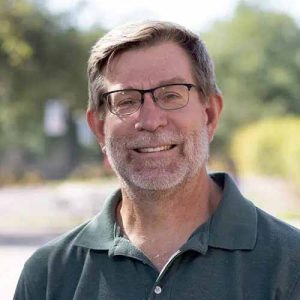
Doug Mendenhall
In 1982 I begged for a job down on the corner of Cypress and North First from Dick Tarpley, crusty editor of the Abilene Reporter-News. He scared me, even though I’d been a summer intern in his newsroom and performed pretty well.
But now I was graduating from Abilene Christian University with a degree in journalism, and my fiancée was still in school for a couple years more. I desperately needed a job from the only daily paper in town.
Tarpley said the only opening was designing sports pages, and I probably wouldn’t want that. I snapped it up, then worked five years in every corner of the newsroom, redesigning the morning and afternoon editions, figuring out how to create graphics on the paper’s first Apple computer and even writing a weekly column for six months or so before heading out to Nashville and points beyond.
Of course, the very best consequence of those five years was to offer a smoother on-ramp for my marriage to Janet that’s still clicking along in spite of the lousy hours that came with a lot of newspaper jobs.
However, the ARN also grounded me for a 25-year career in daily newspaper work, which then led eventually to my second career as a college professor, teaching journalism to children of the 21st century.
I’m enjoying the professor career as much as I did the newspaper one. Better hours, too; no classes during major holidays or most of the summer. On top of that, ACU professors can apply every seven years to take a semester off, go elsewhere and immerse themselves in some pet research or other worthy project.
The West Texas Tribune is my worthy project, and if you’ve lived in the Abilene area for even a few years, you ought to be able to figure out why.
The ARN building that anchored Cypress Street is no more. Soon that land will make a nice parking lot and rest stop for downtown shoppers. Today’s ARN staff is minuscule, especially compared to the busy newsroom I worked in during the ’80s. Other local news outlets are also shrinking and shifting here; for example, the audience for our network TV affiliates is leaking away to mobile platforms and social media.
It is much harder today for Abilenians to track what’s happening in your community than it was in my days of old.
And that’s not just true for Abilene.
After a generation of rapid technological and social changes, the current landscape for news media in the United States is unstable and eroding, particularly in regards to community news. While major companies such as The New York Times and the cable giant Fox News still make money by covering national and world events, that is not the case for communities the size of Abilene.
A key factor in this shift is the evaporation of traditional advertising, which once sold either print space or TV time to local companies wooing attentive customers. Today, though, nearly all advertising takes place online at a fraction of the cost, and instead of local news media being paid to provide ad space or time, that money goes primarily to Google and the other digital giants. With the longstanding link broken between local news media and local advertising revenues, entities such as the Abilene Reporter News and the local TV affiliates have fewer resources to spend on personnel.
In cities and towns across the nation, these dire situations have come to be known as “news deserts,” where the residents have few reliable sources of information about their own communities. For example, media coverage of city councils and local school boards dries up, leaving such entities to conduct business without community oversight.
Certainly, this affects daily life in Abilene. Certainly, it ought to be of immediate concern for anyone who wants to be an involved, responsible citizen of Abilene. My wife and I are invested in this city, too, so I feel you.
However, the drying up of local news also affects my career in the ACU Department of Journalism and Mass Communication, the only such nationally accredited program within 150 miles of Abilene. My students today have fewer local opportunities for practicing their chosen craft in professional settings outside the classroom.
That’s why I’ve chosen to spend my semester of what ACU calls “faculty renewal leave” working with West Texas Tribune publisher Floyd Miller to see if we can improve the public flow of information within the Abilene community while maybe also expanding the professional opportunities available to those rookie journalism students.
The Tribune is small, but as a non-profit with eyes on community service instead of the green bottom line, it has a great deal of potential for growth. And I firmly believe that in a variety of ways, a stronger community news outlet will lead directly to improved quality of life in Abilene. We can build on these existing assets, for starters:
- The Tribune gives residents a venue for submitting their own accounts of local events, especially events not covered by time-crunched employees of the other news entities.
- The Tribune gives you and other residents a forum for expressing thoughtful viewpoints about important local and societal issues – without the anger and tumult of social media feedback.
- The Tribune gives local youngsters a starting place for learning to express themselves to a wider audience.
So, I’ll be around until May, putting my head together with Floyd Miller’s to see what we can do to help build up our community with our shared experience.
I’m not as scared as I was when I went to see Dick Tarpley 40-plus years ago with my fingers crossed.
But I am definitely excited.

I’m so glad that you’re spending your semester doing this!! As the mom of 2 ACU Journalism majors, this makes me excited and hopeful.
Lynn,
Thanks for the support. If you run into any media-appreciative folks who just can’t figure out where to send their extra donation dollars, tell them the West Texas Tribune is a worthy cause.
Wonderful news, Doug! When I was a JMC major, I had a paid internship at a printing company in Abilene. I worked on one of the first Compugraphic typesetting machines; had to switch fonts by changing the long, rectangular “film” over a steel wheel. Of course, that was magic back then. We live in interesting times, experiencing the shift in how information and disinformation are shared on our phone computers. Back in 1990, I starting teaching in the JMC department, first class was copyediting. I moved to English and then administration, loved my adult experience at ACU almost as much as my undergraduate experience. Happy for you to have this experience, enriching for you and the community!
Mimi,
Thanks for the encouraging words and remembering stuff from the previous century. The Optimist had those same font strips when I was a freshman. I’m having fun, helping figure out how to strengthen this historic news outlet and also how to strengthen the JMC ties to it.